A few months ago, a sales deck at Strategyzer took a full day to get right, with two to three hours of that spent on hands-on design. Today a rep can go from finished content to a polished, on-brand deck in about thirty minutes.
That change didn’t come from new hires or outside help. It came from a set of Claude skills I built that give our sales, marketing and client delivery teams direct access to our design system, including the decisions a designer would normally make for them.
My role at Strategyzer is senior product designer, and my remit is the product. The website, sales decks and client reports sit outside it. This piece covers why I took them on anyway, how I built the system, and what it has done for the business.
Design work nobody owned
Strategyzer’s product team is small: two developers, a head of product and me. I was hired to design the product, and that is where my time is meant to go. Everything else a customer sees, from web pages to sales decks to client reports, had no designer attached to it.
Each team had found its own way around that.
Marketing brought in a freelance designer for every new page on the website. Each page came with a brief, rounds of revisions, a cost and a wait.
Sales built decks in PowerPoint without design support. Getting a deck to a standard the team was proud of took a full day from start to finish, two to three hours of it hands-on design. In sales that time is expensive. A lead who waits for a proposal is a lead that cools.
Customer delivery and client relations produced reports for external clients. Consultants whose real value is strategic insight were spending hours on formatting and on deciding how to present data, and any inconsistency went straight to a paying client.
None of this was a failure on anyone’s part. These teams had the expertise and the content. What they lacked was a design system built for the way they work. I could see the gap clearly, and my background in design and hands-on work with AI put me in a good position to close it.
Encoding design judgment
A design system usually means tokens, components and a well-kept Figma library. That is valuable for designers and does very little for a sales rep with a proposal due on Friday. A component library doesn’t assemble itself into a deck.
The harder thing to hand over is judgment: the many small decisions a designer makes almost automatically. Which layout suits this content, when a chart communicates better than a table, how much weight a heading needs, what belongs in a hero and where it sits. If these teams were going to produce design-quality work without a designer, the system had to make those calls for them.
Claude skills made that practical. A skill is a packaged set of instructions and assets that Claude loads whenever it does a particular kind of work, which let me capture how our brand behaves as well as how it looks. Guidelines such as “Regular weight everywhere, Bold only for chips” or “full-bleed primary-color heroes with the illustration on the right” became defaults Claude applies every time.
I had already proven the approach on our product UI, where I turned our FondUI design system into a self-contained skill extracted directly from Figma. The open question was whether it would hold up for teams who had never opened Figma.
Three skills, built around three outputs
I built a separate skill for each team, designed around the thing that team ships.
- SkillWebsite design systemShipsWeb pagesUsed by Marketing
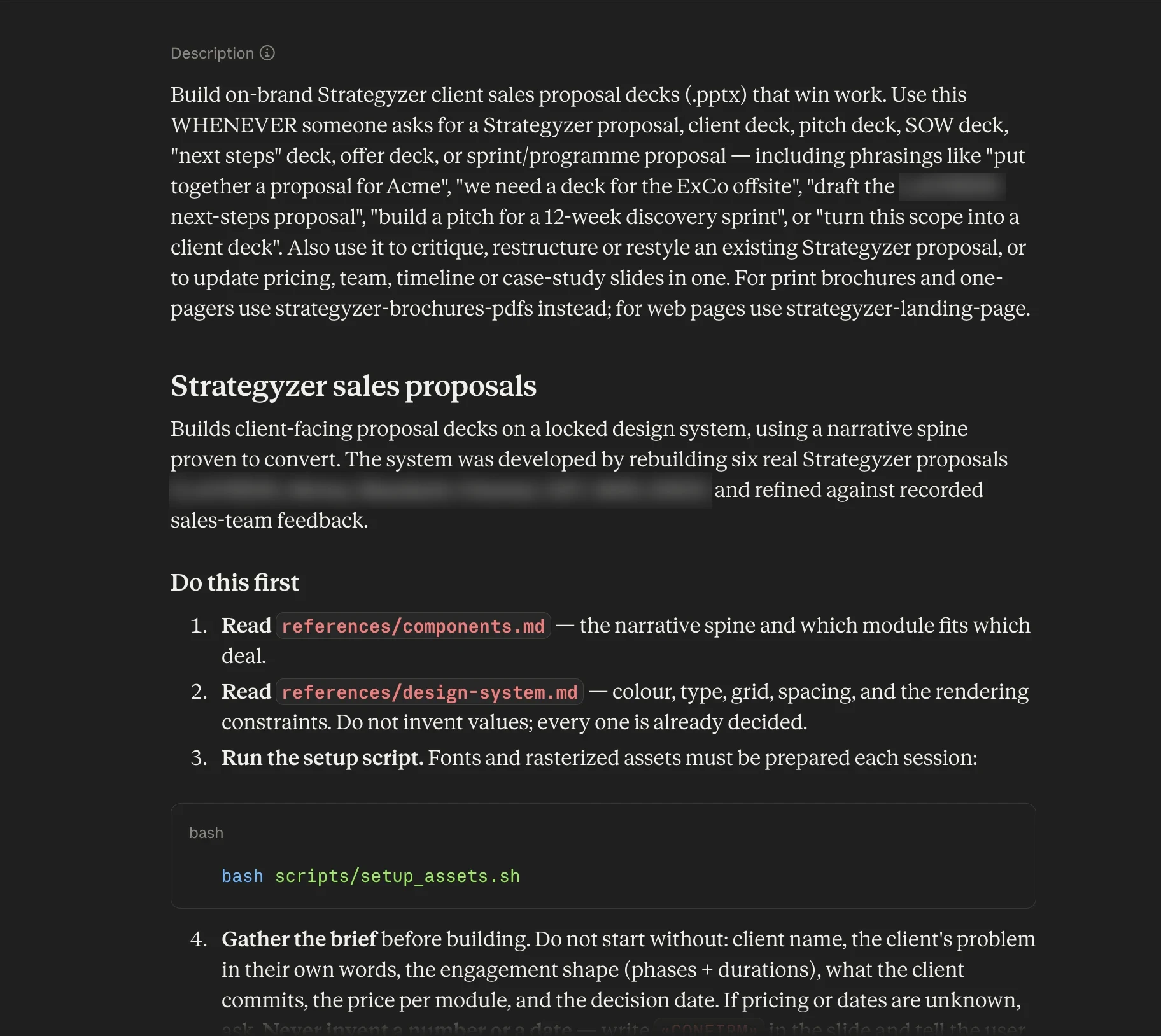
- SkillSales proposalsShipsSales decksUsed by Sales
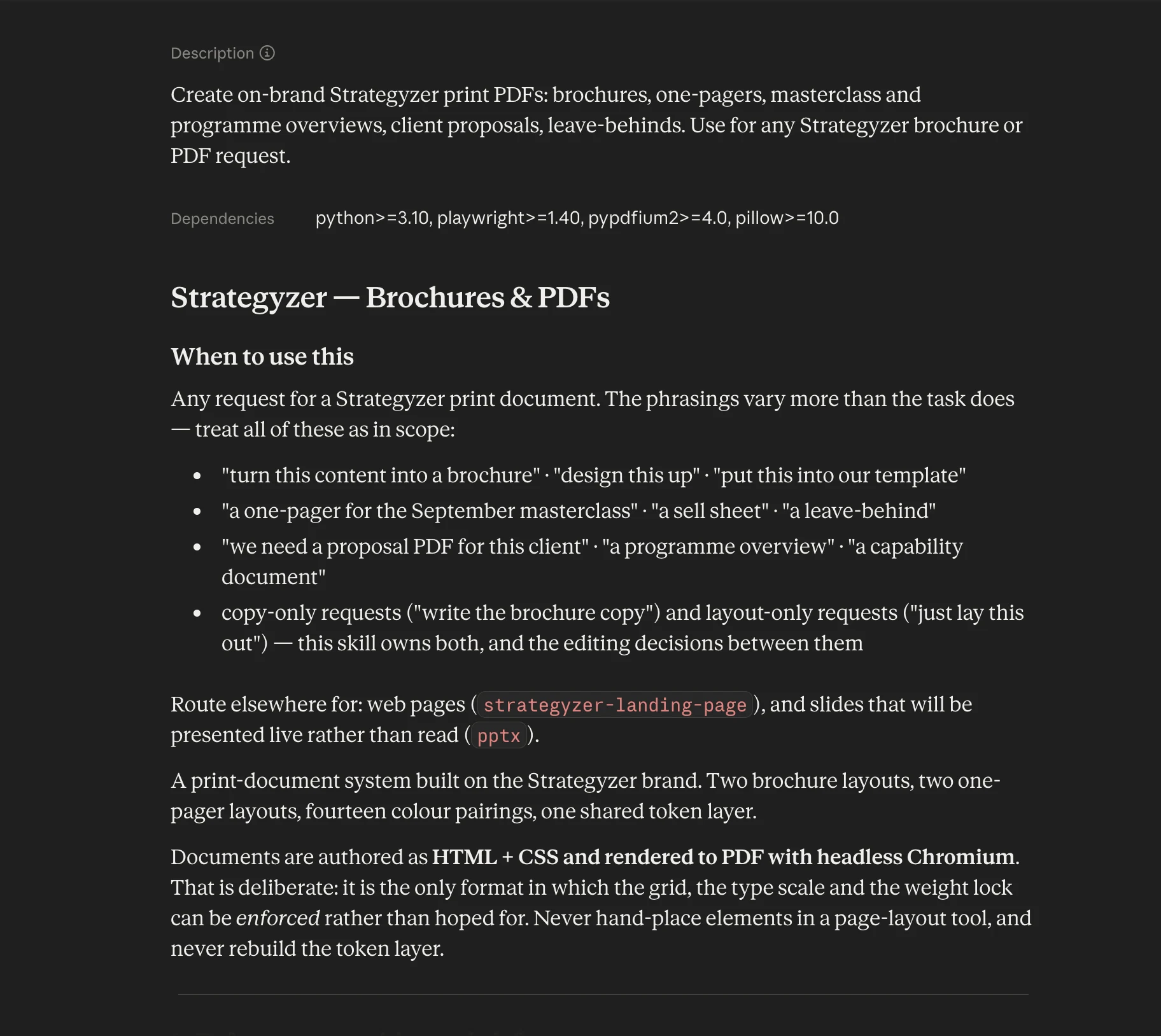
- SkillBrochures and PDFsShipsClient reportsUsed by Client delivery
Marketing: web pages
The marketing skill contains our full website design system: brand assets, the TWK Everett typeface, semantic tokens, component rules and layout patterns. The team writes the content, hands it to Claude and gets back a page that follows the system from the first draft, with no freelancer brief required.
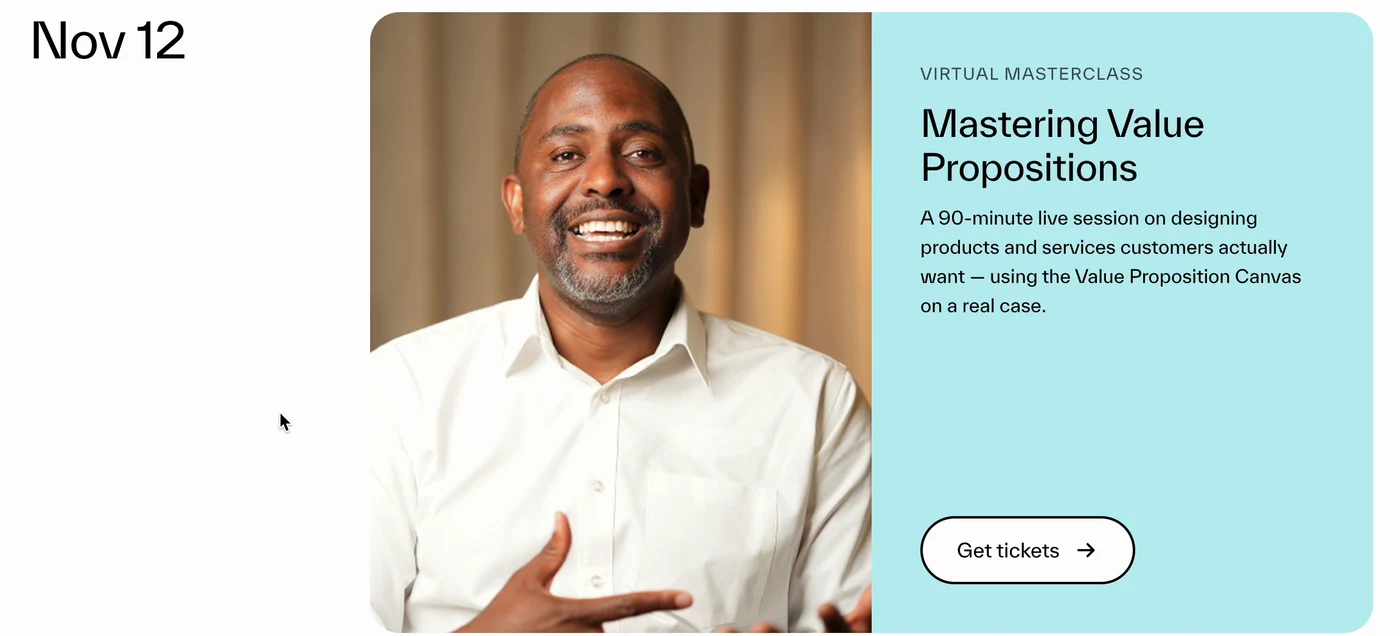
Our Events page shows what that looks like. The first version was built in Webflow by a freelance developer. The second was made by Claude in one go, using the marketing skill, and it’s what we used to update the page.
Look closely at the event listings. The date sits on the left, the card splits into an image half and a colour half, and the label, title, description and outlined button sit in the same places. Claude matched the developer’s component because the skill holds the design system’s rules, and it followed them exactly.

Sales: decks
The sales skill encodes how a Strategyzer deck should look and flow, from slide layouts and visual hierarchy to how a story builds for a prospect. A rep brings the content, and Claude produces a polished deck in about thirty minutes. Each rep can now turn around two or three decks a day.
Client delivery: reports
The reporting skill governs how findings and data are structured and visualized for external clients. The delivery and client relations teams no longer spend time on layout or on how a figure should be presented, so their attention goes to the substance of what the client needs to know.
Brochures: one brief, three versions
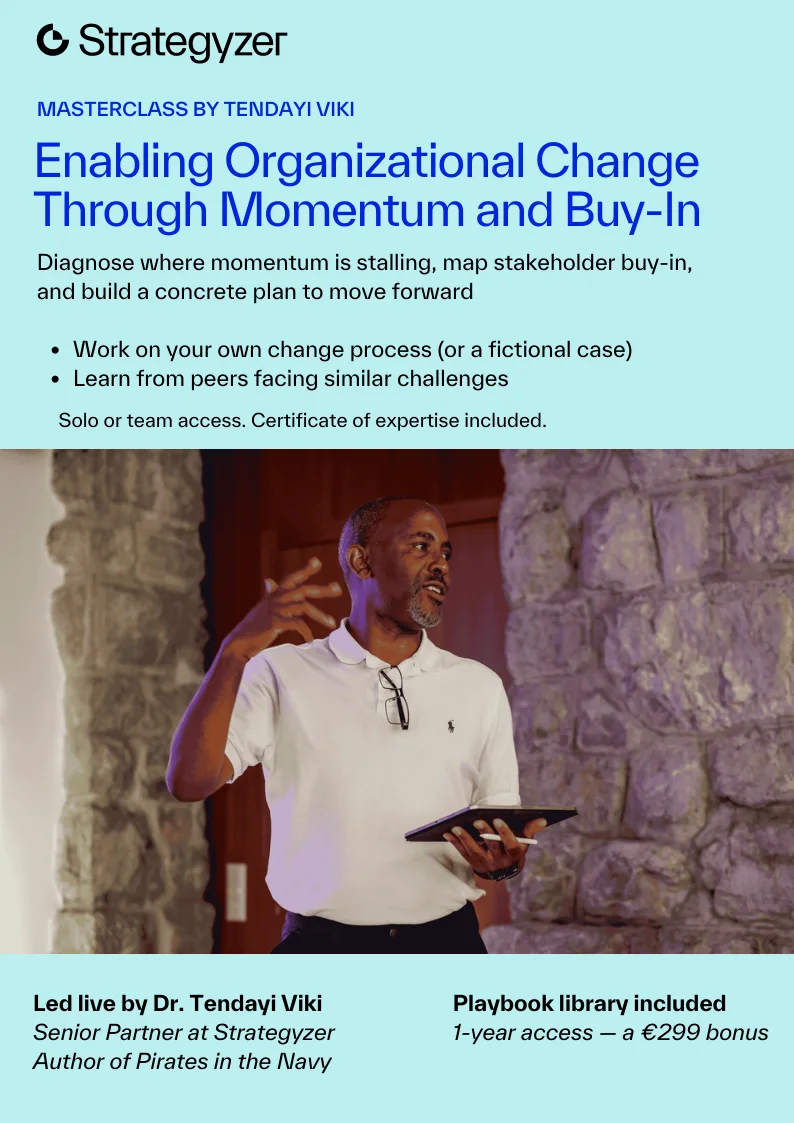
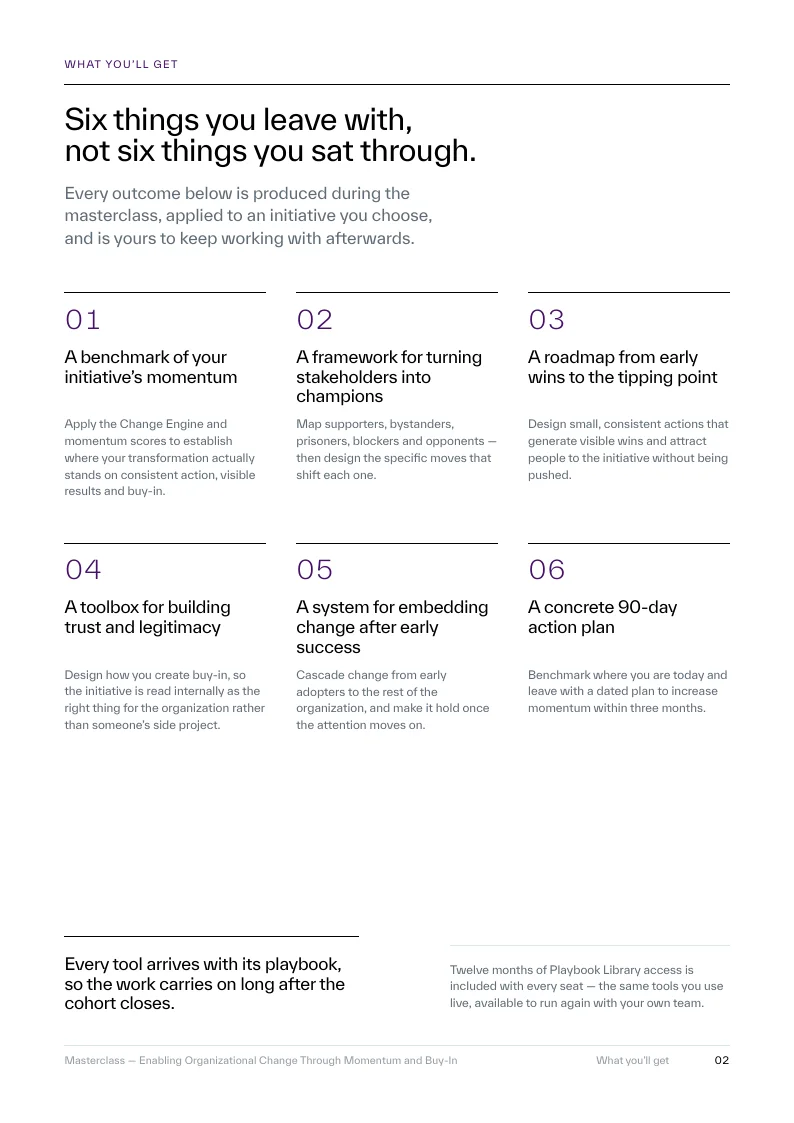
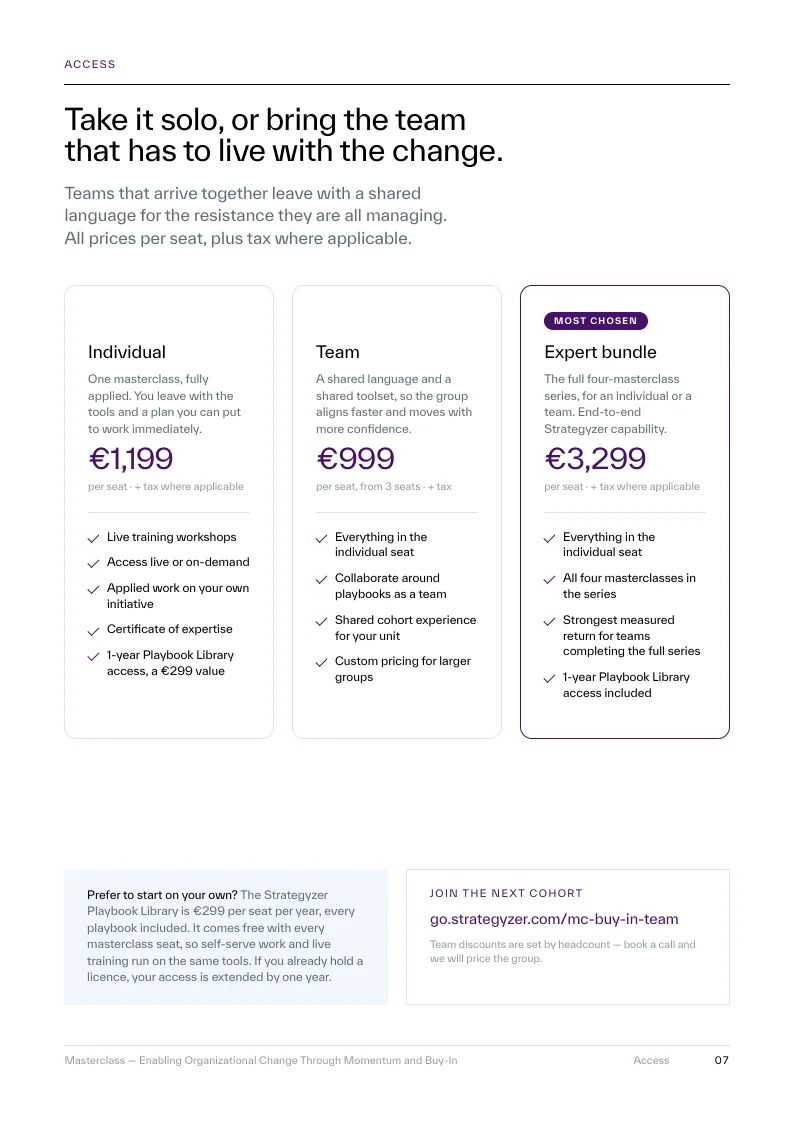
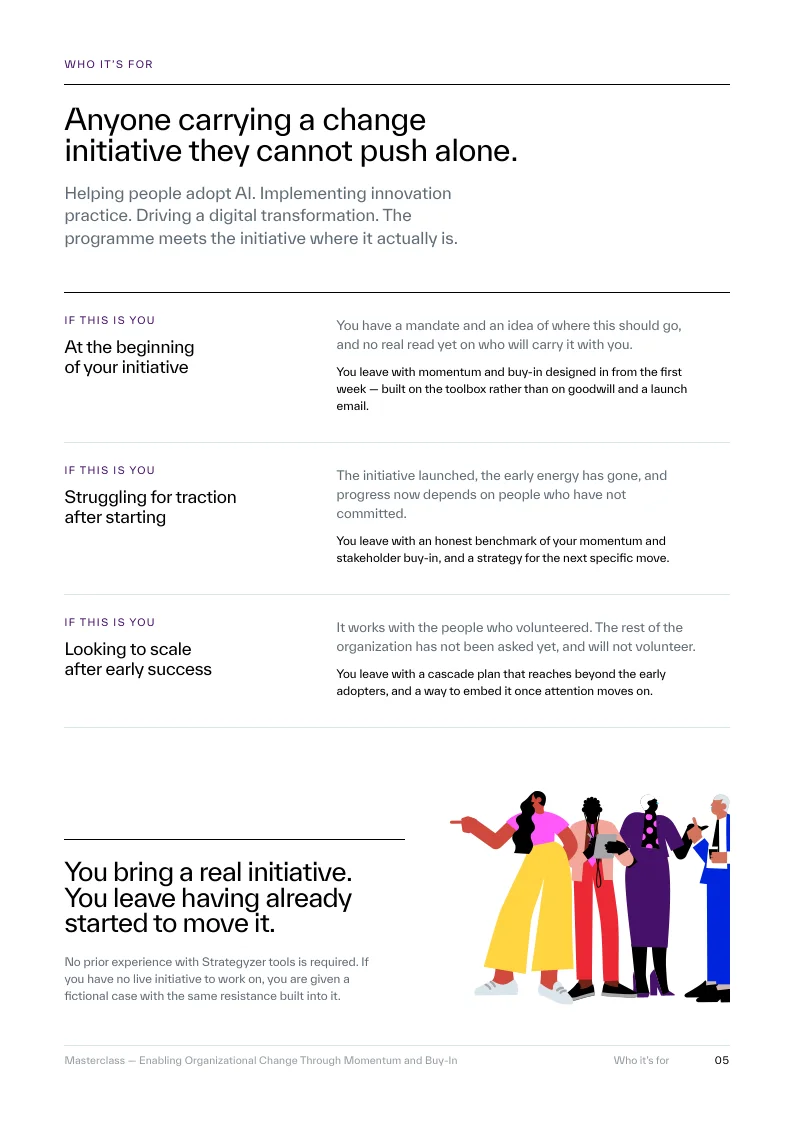
The same skill makes our print brochures. Below is the brochure for one of our masterclasses, Enabling Organizational Change Through Momentum and Buy-In, before and after. I made the new versions myself with the skill, to see the difference side by side.
I built the skill to offer variations using our brand’s primary colours. From one set of content, Claude produced three versions, each in a different colour pairing, with the layout and structure already in place. The old brochure didn’t look like the rest of our brand. The new ones are clean, editorial and professional.
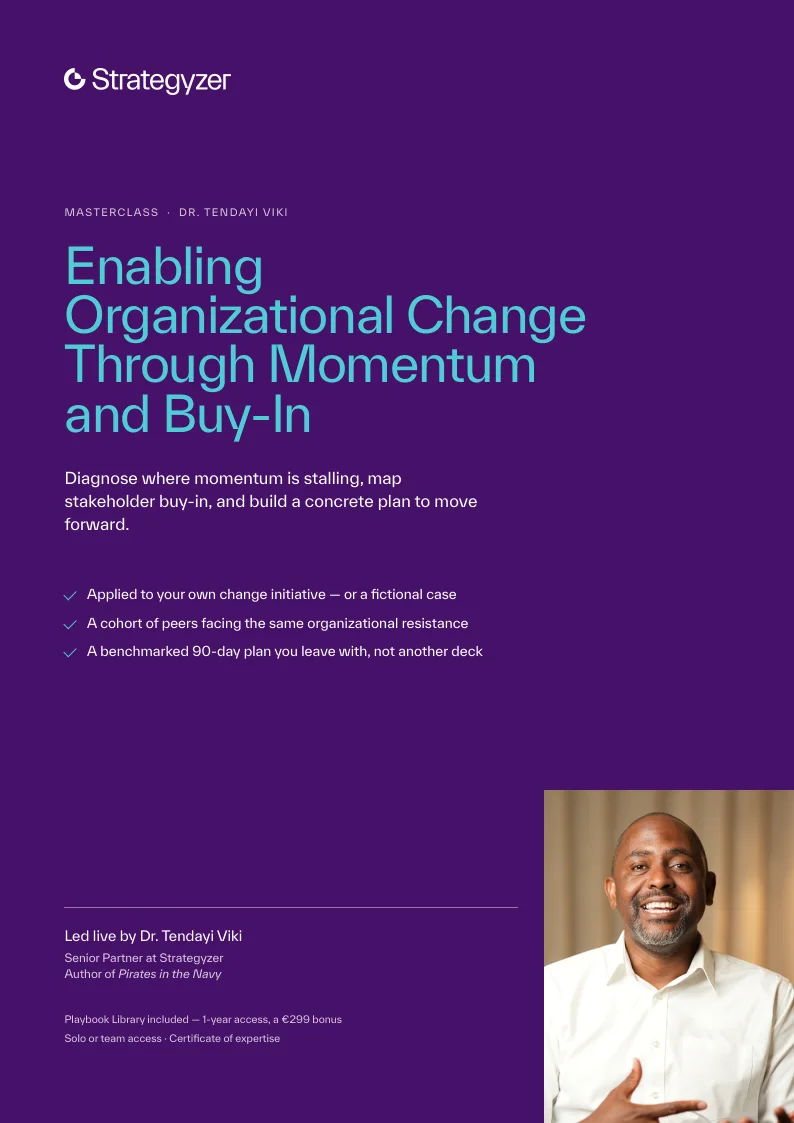 Aqua on purple
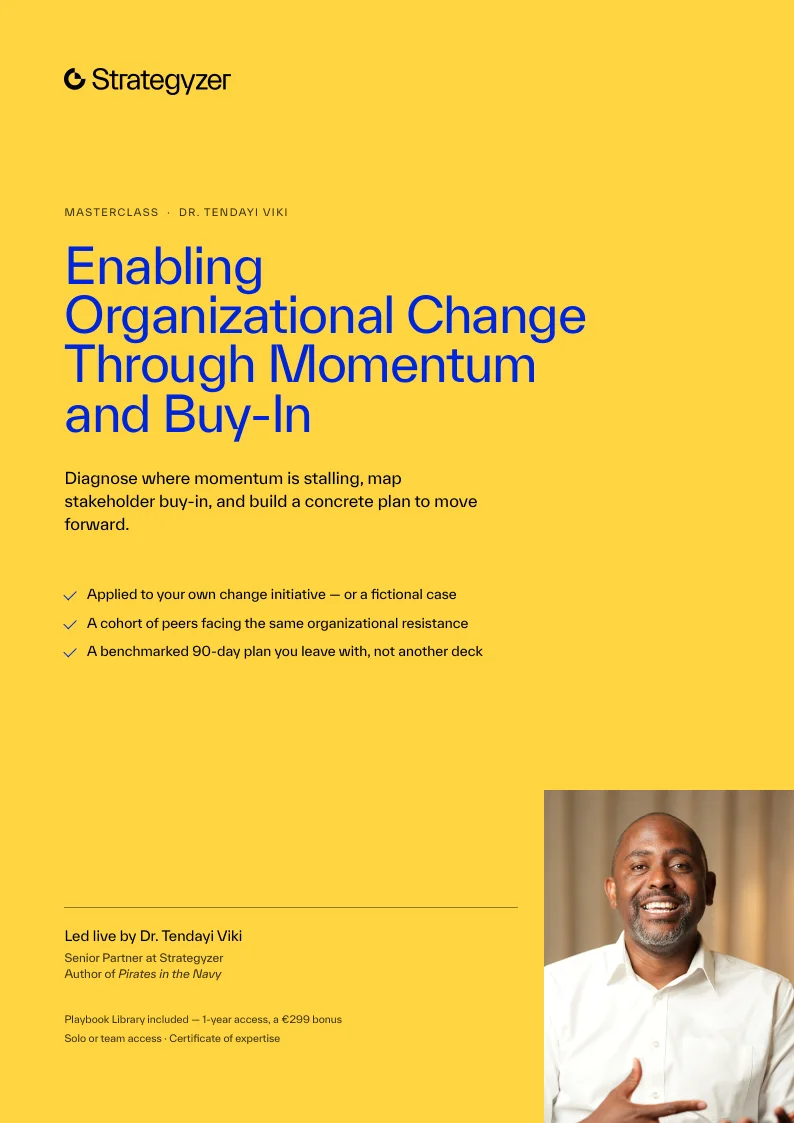 Blue on yellow
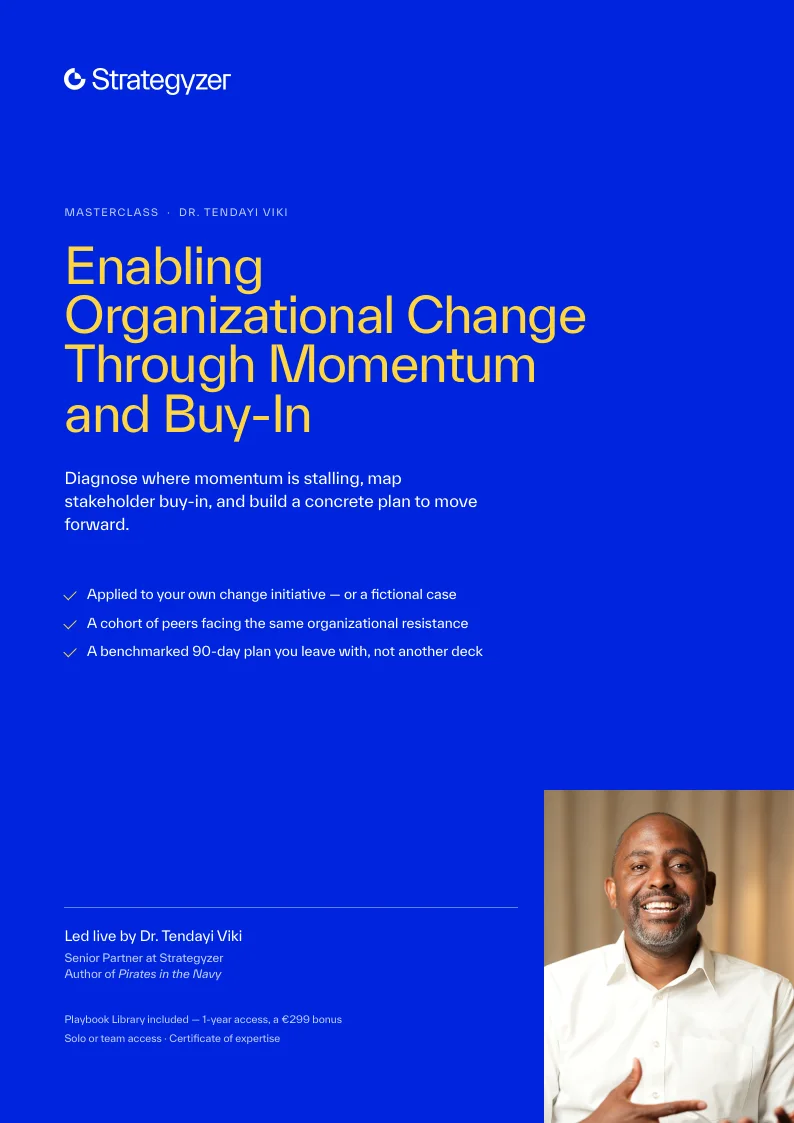 Yellow on blue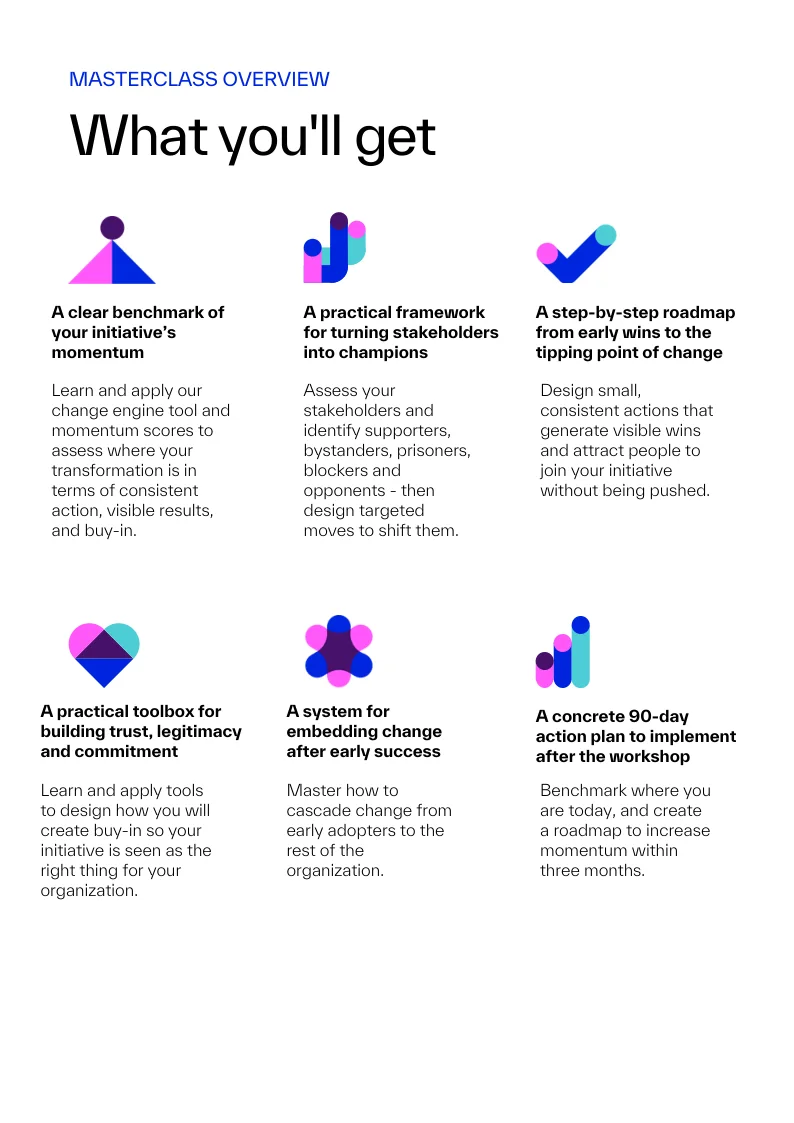
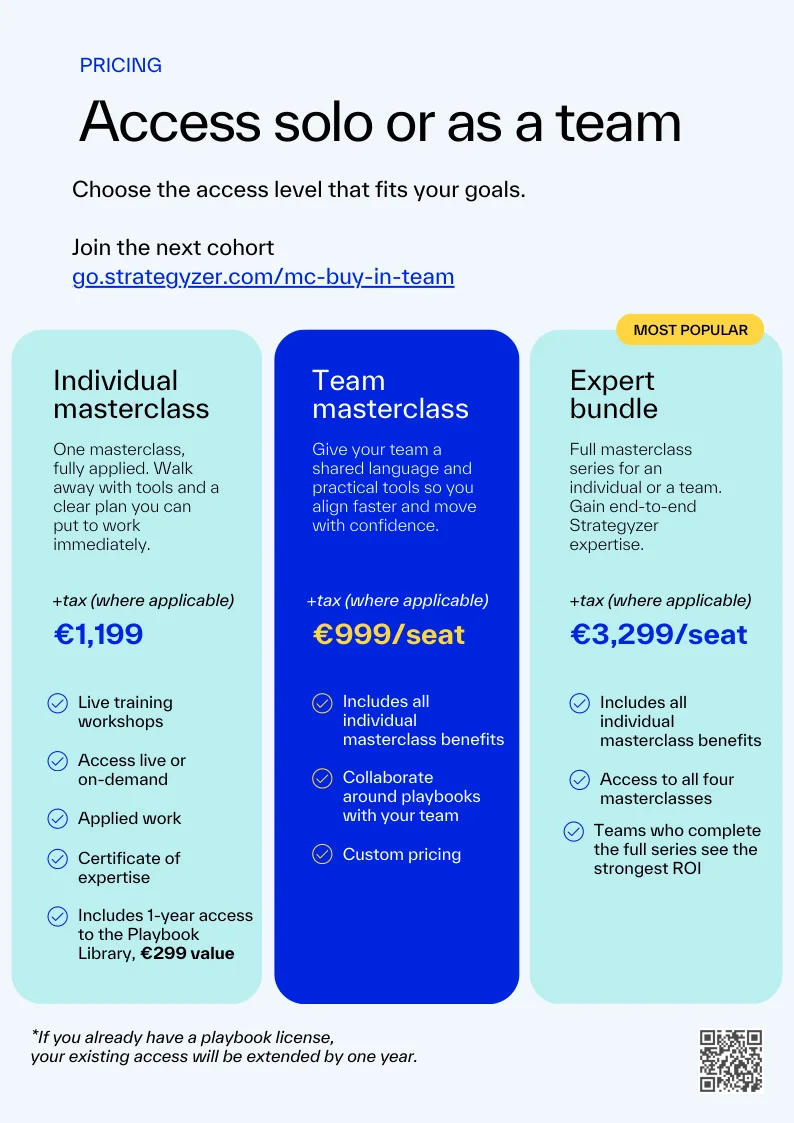
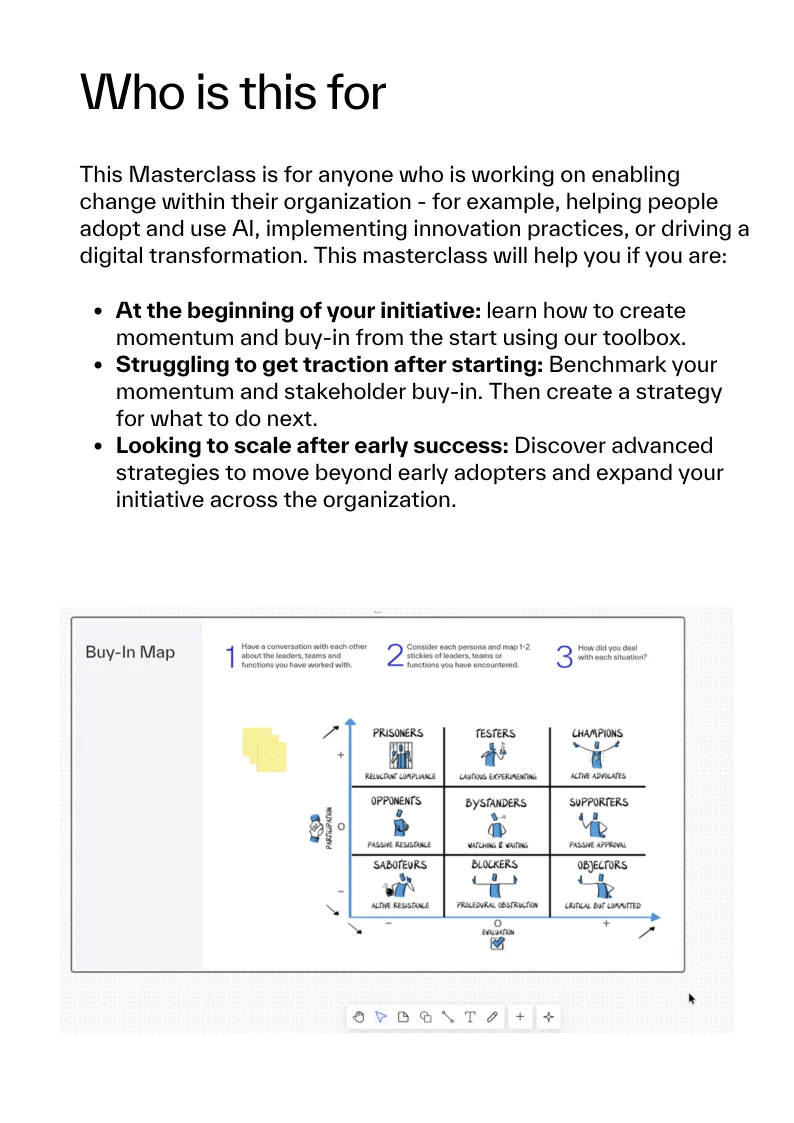
How I built it
Each skill is a self-contained package, and building them was as much a systems problem as a design one. A few principles run through all of them.
A single source of truth. For the product system, I extracted components and tokens directly from Figma using MCP tooling, so the skill stays in step with the design files. The marketing skill came from our website library in Figma the same way. Sales already had a style of its own, so I built on it and improved it. For reports, I started from the design system and designed a more professional style, drawing on recent editorial design.
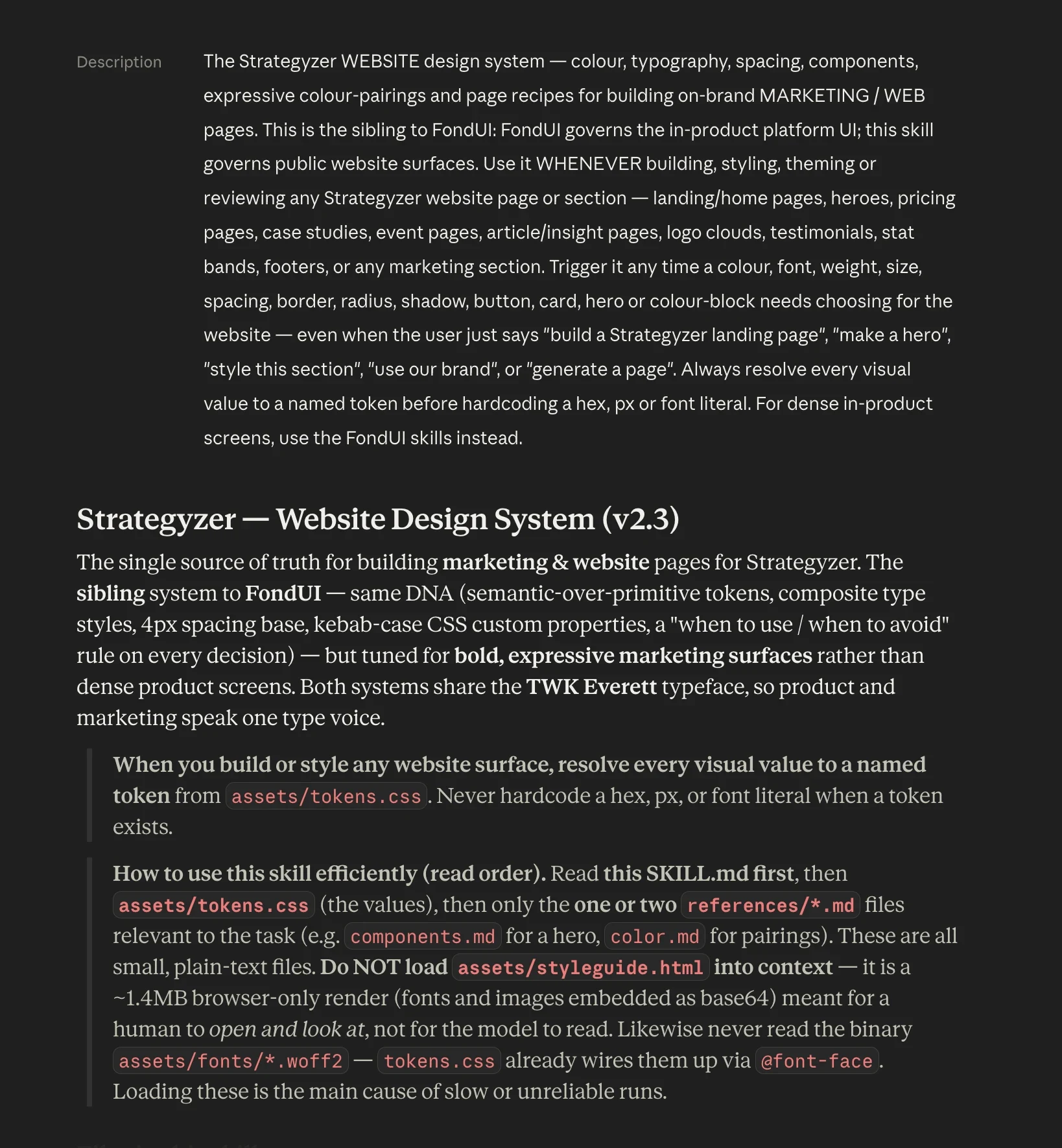
Semantic tokens. Color, type, spacing and components are organized in semantic hierarchies and exposed as kebab-case CSS custom properties. Claude selects each value by its role in the layout, which keeps output consistent across every page, deck and report.
Embedded brand assets. Brand assets and our TWK Everett fonts ship inside the skills, so Claude never substitutes a generic default.
Explicit rules. Type weights, hero layouts, navigation order and component usage are written as firm rules. Loose guidance is where AI output starts to drift, so I kept room for interpretation to a minimum.
Testing with the teams. I shared early versions with members of the sales team. They loved the first versions, and most of their feedback was about how a deck tells its story. So I reworked the hierarchy and the flow of each deck, so it reads like a conversation with the prospect, and built that into the skill.
Versioning. Each skill is maintained centrally and versioned; the marketing system is currently on v2.3. When a rule changes, I update it once and every team picks it up in their next session.
The impact
The most visible change is speed. Work that used to wait on a freelancer or a multi-day PowerPoint effort now moves as fast as the content is ready.
Quality improved alongside speed. Decks, pages and reports are more polished, the language is sharper, and the layouts are cleaner and more consistent. A prospect reading a sales deck and a client reading a report now see the same Strategyzer.
For sales, the time saved compounds into revenue. Reps send more decks, reach more leads and get proposals in front of prospects while interest is still high, which means a larger pipeline that moves faster. With five to seven people in sales, each making two or three decks a day, the team can now send roughly 50 to 100 decks a week, up from about 25 to 35 when a deck took a full day. Our pipeline has grown significantly since. The exact figures are confidential, so I can’t share them here.
“This has been easily one of the largest quality leaps in the Sales Team’s work since my time at Strategyzer.”
As simple as it seems, a skill that can regenerate slide decks or Word documents into fully editable, minimalistic, coherent and well-designed decks consistent with the Strategyzer brand language has made a tremendous difference in the quality of our sales team’s work.
What used to take 2–3 hours on average (with mediocre-to-good effects) is now taking 2–3 fifteen-minute iterations with Claude. We can spend much more time focusing on the value and content of the proposal decks, rather than waste time on average-quality design work.
Does it do the whole work for us? No, but it helps us focus where it’s truly important and ensures that the entire team works from the same baseline.
Olaide took less than a week to build a working prototype of the skill and in total, it took less than 3 weeks from the idea to full rollout across the entire sales team.
On the delivery side, every report now meets the same standard regardless of who prepared it, and the team’s time goes into analysis. Reports are mostly made after each client delivery, and the skill saves hours on every one. That time goes back to customer success, to actually delivering and supporting our customers.
The work also changed my role. I’m still a senior product designer and I still own the product. Alongside that, I now act as design lead for the wider company, responsible for how design shows up wherever Strategyzer meets a customer. I took that on by choice, and it has become one of the most rewarding parts of my work.
What I took away
- Internal teams deserve the same design rigor as customers. Treating marketing, sales and delivery as users, each with their own jobs and constraints, shaped every decision in these skills.
- Judgment is harder to hand over than assets. The library was the easy part. The real work was writing down the decisions I make instinctively.
- Constraints build trust. The stricter the rules, the more consistent the output, and the more readily teams relied on it.
- A system needs an owner. Versioning, feedback and regular updates are what keep the skills useful as the business changes.
- Business terms carry the argument. Hours saved and deals moved made the case for this work far better than “it looks more consistent” ever could.
Beyond the brief
Looking back on the year, this system may be the most useful thing I designed. It lets people across Strategyzer produce design-quality work without a designer in the room.
It’s also a fair picture of how I work. I look for the places where design can move the business, then build what’s needed to get there, including when that sits outside my job description.
If you’re working on a similar problem, or building a team that needs design to reach well beyond the product, I’d love to talk.